
Best Whale Watching Spots on the NSW South Coast
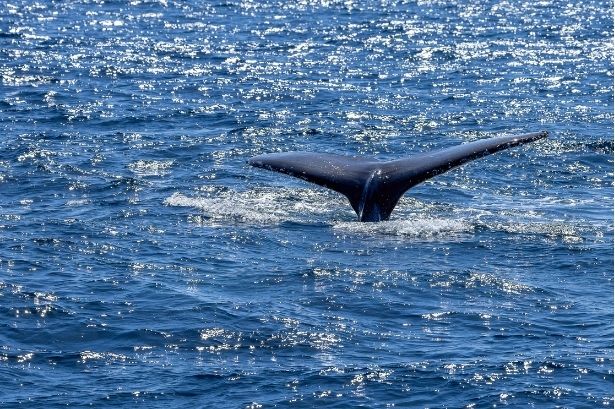
From around May to November each year, migrating whales travel along the NSW coastline, creating several months of whale-watching opportunities across the South Coast. Humpback whales are the most commonly seen species, with whales generally travelling north earlier in the season and returning south later in the year.
You do not necessarily need to book a cruise to see them. Elevated headlands, dedicated viewing platforms and sections of the Kiama Coast Walk provide useful land-based vantage points, while Huskisson is the main departure point for whale-watching cruises in Jervis Bay.
Quick overview spots:
| Whale watching spot | Area | Best for | Viewing type | Allow |
| Kiama Blowhole & Blowhole Point | Kiama | Families, first-time visitors, easy access | Land-based | 30–60 minutes |
| Minnamurra Whale Watching Platform | Minnamurra | Dedicated viewing, photography | Land-based | 30–60 minutes |
| Gerringong Whale Watching Platform | Gerringong | Elevated views, combining with a town visit | Land-based | 30–60 minutes |
| Penguin Head | Culburra Beach | Quieter coastal viewing | Land-based | 30–60 minutes |
| Huskisson Whale Watching Cruises | Jervis Bay | Dedicated whale-watching experience | Boat | Around 2–3 hours |
| Cape St George Lighthouse | Jervis Bay | Clifftop views and national park scenery | Land-based | 1–2 hours |
| Green Cape Lighthouse | Eden | Up-close land-based whale watching, dramatic cliff views, and maritime history | Land-based | 1–2 hours |
Kiama Blowhole and Blowhole Point
Location: Blowhole Point Road, Kiama NSW 2533
Best for: Families, first-time whale watchers and short visits
Cost: Free
Allow: Around 30–60 minutes
Kiama Blowhole and Blowhole Point combine one of Kiama’s best-known attractions with easy land-based whale watching. The elevated headland offers broad ocean views, making it a convenient place to watch for whale blows, splashes and breaching during migration season.
Entry and whale watching are free, with no booking required. Free parking, public toilets, seating and accessible paths are available nearby, although parking can fill quickly on busy weekends and during peak whale-watching periods. Bringing binoculars can also help with spotting whales further offshore.
Minnamurra Whale Watching Platform
Location: 59 Eureka Avenue, Kiama Downs NSW 2533
Best for: Dedicated land-based whale watching and photography
Cost: Free
Allow: Around 30–60 minutes
Minnamurra Whale Watching Platform is a purpose-built lookout on Minnamurra Headland, with elevated ocean views that make it easier to spot migrating humpback whales, breaches and whale blows. Dolphins may also be seen along this stretch of coastline.
Access is free, with free parking nearby. The platform also connects with the Kiama Coast Walk, so you can visit it as a quick stop or include it in a longer coastal walk. Northbound humpbacks are commonly seen from late May to July, while southbound whales, including mothers with calves, are often seen from September to November.
Gerringong Whale Watching Platform
Location: 3 Tasman Drive, Gerringong NSW 2534
Best for: Whale watching, photography and a quieter coastal stop
Cost: Free
Allow: Around 30–60 minutes
Gerringong Whale Watching Platform sits on Gerringong Headland between Werri Beach and Boat Harbour, offering elevated ocean views for spotting migrating humpback whales. It is particularly useful during the southbound migration from September to November, when mothers and calves may be seen closer to shore.
Access and parking are free, with grassy areas, picnic facilities and public toilets nearby. The platform is also located near the southern end of the Kiama Coast Walk. Because vegetation can partially block views from the wooden platform, it is worth walking a short distance across the surrounding grass for a clearer outlook. Bring binoculars or a zoom lens, as there are no public viewing scopes.
Penguin Head, Culburra Beach
Location: Penguin Head Road, Culburra Beach NSW 2540
Best for: Quiet whale watching, coastal scenery and photography
Cost: Free
Allow: Around 30–60 minutes
Penguin Head is a natural rocky headland between Culburra Beach and Warrain Beach, offering wide, unobstructed ocean views for spotting migrating humpback whales. Unlike purpose-built viewing platforms, it has a more remote and natural feel, with dolphins, seabirds and occasionally seals also visible along the coast.
Access and parking are free, but facilities are limited. There are no public toilets, viewing scopes or dedicated whale-watching platforms, and the short walk from the car park follows uneven natural ground. Bring binoculars or a zoom lens, wear sturdy shoes and take extra care near the cliff edge, particularly in strong winds or when visiting with children.
Huskisson Whale Watching Cruises
Location: Huskisson Wharf, Huskisson NSW 2540
Best for: Close-up whale encounters and boat-based wildlife viewing
Cost: A65–A75 per adult
Allow: Around 2–2.5 hours
Huskisson is the main departure point for whale-watching cruises in Jervis Bay, offering a closer experience than land-based lookouts. Operators such as Jervis Bay Wild and Dolphin Watch Cruises take passengers into Jervis Bay Marine Park to look for migrating humpback whales, with mother-and-calf pairs often seen during the southbound migration from September to November.
Standard cruises usually last around two to two-and-a-half hours, with adult fares typically around A65–A75 . Boats depart from Huskisson Wharf, and passengers are generally advised to arrive around 30 minutes before departure. Cruises may also encounter resident bottlenose dolphins and other marine wildlife during the trip.
Because Jervis Bay is relatively sheltered, conditions can be calmer than exposed offshore waters, although seasickness is still possible. During whale season, major operators may also offer a return voucher if no whales are sighted, subject to their current terms.
Cape St George Lighthouse
Location: St George Head Road, Booderee National Park, Jervis Bay Territory 2540
Best for: Whale watching with coastal scenery and historic interest
Cost: Free to visit, but a Booderee National Park vehicle pass is required
Allow: Around 45–60 minutes
Cape St George Lighthouse is a historic sandstone lighthouse ruin set on high cliffs within Booderee National Park. Its exposed position provides broad views over the open ocean, making it a strong land-based location for spotting migrating humpback whales while also exploring one of the area’s most distinctive historic sites.
There is no separate admission fee for the lighthouse, but visitors need a valid Booderee National Park vehicle pass. Parking is available near the ruins, with boardwalk access, interpretive signage and public toilets on site. Bring binoculars, as whales may be some distance offshore, and take extra care in strong winds around the clifftop area.
Green Cape Lighthouse
Location: Green Cape Lighthouse Road, Beowa National Park, Green Cape NSW 2551
Best for: Up-close land-based whale watching, wild coastal scenery, and maritime history
Cost: Free to visit the grounds, but a Beowa National Park vehicle pass is required ($8 AUD/vehicle/day); guided tower-climbing tours carry an extra fee
Allow: Around 1–2 hours (excluding driving time)
Green Cape Lighthouse is Australia’s first concrete lighthouse tower, standing tall on a dramatic cliff edge within Beowa National Park. Its prominent position offers near 360-degree ocean views over Disaster Bay, making it one of the country’s premier land-based whale-watching locations—where migrating humpback whales and fur seals often swim remarkably close to the cliff base.
Visitors can walk the scenic tracks or visit the historic SS Ly-ee-Moon shipwreck memorial. Parking is available near the lighthouse with boardwalk access, interpretive signage, and public toilets on site. Please note that the final stretch to the lighthouse consists of an unsealed gravel road, so drive carefully. Bring binoculars, water, and warm clothing to shield against strong coastal winds.
Best Time for Whale Watching on the NSW South Coast
The best time to see whales along the NSW South Coast is generally from May to November, covering both the northbound and southbound humpback migration.
May to July: Northbound Migration
From May to July, humpback whales travel north from Antarctic waters towards warmer breeding grounds. They tend to move more steadily during this part of the migration and may be seen further offshore, so elevated headlands and clifftop lookouts are particularly useful.
This period is well suited to land-based viewing from places such as Cape St George Lighthouse and other high coastal lookouts.
September to November: Southbound Migration
September to November is often the most rewarding period for whale watching. Mothers and calves travel south towards Antarctic waters, generally moving more slowly and sometimes appearing closer to shore.
This is also when visitors may have a better chance of seeing more visible surface behaviour, including breaching, tail slaps and spyhopping. Sheltered areas such as Jervis Bay can also provide opportunities to see whales resting or travelling with calves.
Best Time of Day
Early morning, around 6.00 am to 9.00 am, can be a good time for land-based whale watching because winds may be lighter and calmer water can make whale blows and surface movement easier to spot.
For the best chance of a sighting, bring binoculars, scan slowly across the horizon and look first for white blows, splashes or unusual movement rather than trying to spot the whole whale.
Where to Stay for Whale Watching on the NSW South Coast
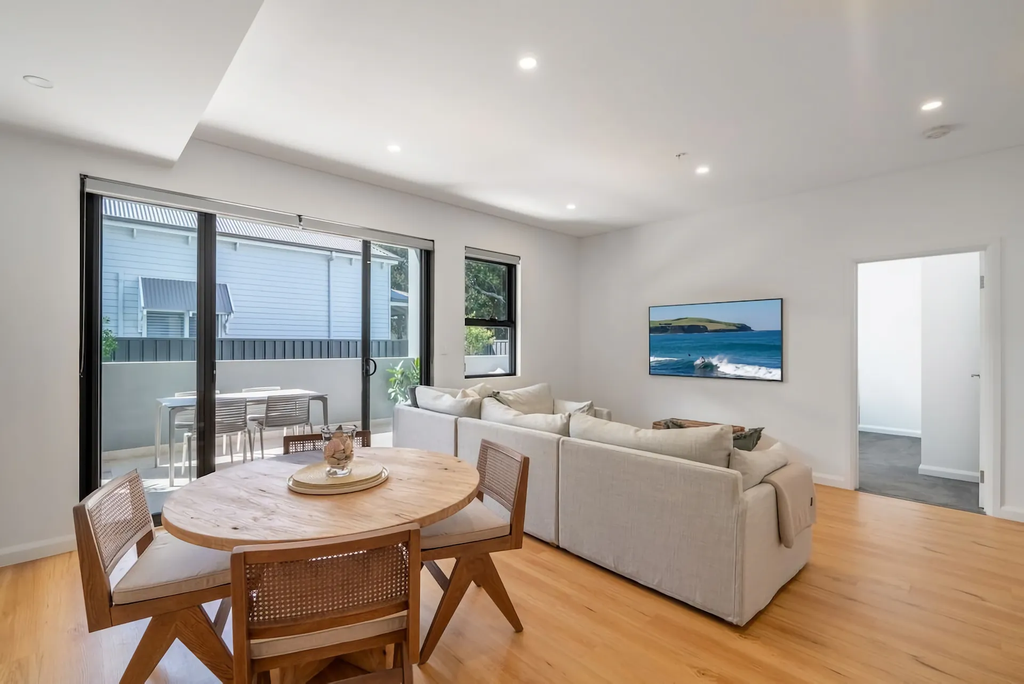
Where you stay can make a big difference to how easy it is to reach the South Coast’s main whale-watching spots. South Coast Holidays offers accommodation in key areas such as Kiama, Minnamurra, Gerringong and the Jervis Bay region, with several properties located only a short drive — or even a walk — from popular lookouts and cruise departure points.
| Whale-watching spot | Suggested South Coast Holidays stay | Approx. distance | Property highlights |
| Gerringong Whale Watching Platform | Belle 4-141 | 400 m | Sleeps 4, 2 bedrooms, 2 bathrooms, 1 car space, free WiFi |
| Minnamurra Whale Watching Platform | Minnamurra Retreat 1 | 1.4 km | Sleeps 4, 1 bedroom, 1 bathroom, 1 car space, free WiFi |
| Kiama Blowhole and Blowhole Point | Seaview Lane Hideaway | 2.2 km | Sleeps 6, 3 bedrooms, 1 bathroom, 1 car space, free WiFi, pet-friendly |
| Huskisson Whale Watching Cruises | Seagrass | 7 km | Sleeps 10, 4 bedrooms, 2 bathrooms, 1 car space, free WiFi, pet-friendly |
Stay Near Kiama Blowhole: Seaview Lane Hideaway
For visitors planning to spend time around Kiama Blowhole and Blowhole Point, Seaview Lane Hideaway is around 2.2 km away. The three-bedroom property sleeps up to six guests and is also pet-friendly, making it a practical option for families or small groups wanting easy access to Kiama’s whale-watching area.
Stay Near Minnamurra Whale Watching Platform: Minnamurra Retreat 1
Minnamurra Retreat 1 is around 1.4 km from Minnamurra Whale Watching Platform, making it one of the most convenient options for visitors prioritising this dedicated lookout. It sleeps four guests and works well for couples or smaller groups planning short whale-watching stops and coastal walks.
Stay Near Gerringong Whale Watching Platform: Belle 4-141
At around 400 metres from Gerringong Whale Watching Platform, Belle 4-141 is the closest option in this shortlist. The two-bedroom, two-bathroom property sleeps four guests, so it is particularly convenient if you want to walk or make a very short trip to the lookout during whale migration season.
Stay Near Huskisson Whale Watching Cruises: Seagrass
For whale-watching cruises departing from Huskisson, Seagrass is around 7 km away. With four bedrooms and space for up to ten guests, it is the strongest option here for larger families or groups planning a Jervis Bay whale-watching trip. It is also pet-friendly.
Things to Know Before Whale Watching
A little preparation can make a big difference to your whale-watching experience, especially because conditions can change quickly along the NSW South Coast.
Check the season and weather
Whale sightings are seasonal, with the main migration generally running from May to November. Before heading out, check the weather, wind and sea conditions, particularly if you are planning a cruise. Early morning can be a good time for land-based viewing because the water may be calmer and whale blows can be easier to spot.
Bring binoculars for land-based viewing
Whales are not always close to shore, even from elevated lookouts. Binoculars or a camera with a zoom lens can make it much easier to pick out blows, fins, tail movements and breaching further offshore. This is especially useful at more open locations such as Penguin Head and Cape St George Lighthouse.
Prepare for wind and changing conditions
Headlands and clifftop lookouts can be noticeably colder and windier than nearby towns. Wear layers, bring a windproof jacket and choose sturdy footwear, particularly at natural viewing areas with uneven ground.
If you are joining a cruise, plan for seasickness
If you are prone to motion sickness, consider taking seasickness medication before departure according to the product directions or advice from your pharmacist or doctor. On board, staying near the middle of the vessel and keeping your eyes on the horizon can also help.
Protect yourself from the sun
Even on cooler days, UV exposure can be strong around the coast and on the water. Bring sunscreen, sunglasses and a secure hat, especially if you expect to spend an hour or more at an exposed lookout or on a boat.
Keep a safe distance from cliff edges
Some whale-watching locations are developed lookouts, while others are natural headlands with fewer barriers. At Penguin Head in particular, the terrain is more exposed and uneven, so take extra care around cliff edges and in strong winds.
Do not expect guaranteed sightings
Whales are wild animals, so sightings can never be guaranteed. Be prepared to spend some time scanning the horizon and look first for white blows, splashes or unusual surface movement rather than waiting to see an entire whale.
Follow wildlife and tour operator guidelines
If you join a whale-watching cruise, choose an established operator and follow crew instructions around wildlife. Avoid making unnecessary noise, feeding animals or doing anything that could disturb whales, particularly mothers and calves.
FAQs About Whale Watching on the NSW South Coast
When is whale watching season on the NSW South Coast?
Whale-watching season generally runs from May to November. Northbound migration is most noticeable from May to July, while the southbound migration from September to November often includes mothers and calves travelling back towards Antarctic waters.
What is the best month for whale watching?
September and October are often among the best months because southbound whales, including mothers and calves, may move more slowly and sometimes closer to shore.
What is the best time of day to see whales?
Early morning, around 6.00 am to 9.00 am, can be a good time for land-based viewing because winds may be lighter and calmer water can make whale blows and surface movement easier to spot.
Where can I see whales for free on the NSW South Coast?
Several land-based spots are free to access, including Kiama Blowhole and Blowhole Point, Minnamurra Whale Watching Platform, Gerringong Whale Watching Platform and Penguin Head. Cape St George Lighthouse itself is free to visit.
Where is the best place for families?
Kiama Blowhole and Blowhole Point is one of the most practical options for families and first-time visitors because it combines whale watching with easy access, parking, public facilities and nearby sightseeing.
Should I bring binoculars?
Yes. Binoculars are useful because whales may be some distance offshore, especially from elevated headlands. A camera with a zoom lens is also helpful for spotting blows, fins and breaching.
Are whale sightings guaranteed?
No. Whales are wild animals and sightings cannot be guaranteed. Scan the horizon for white blows, splashes and unusual surface movement rather than waiting to see the whole whale.